Counties Waking Up…

In a meeting today with school board members from across East Tennessee, I was heartened to hear from some County board representatives that, although the proposed system-level fiscal capacity model for BEP funding would benefit them intially, they realize that it would be harmful to them in the long run.

How? Because it would cause the City school system in their county to fold, consolidating with the County by default. At that point, the County would be responsible for matching the City system’s higher salary and benefit levels, in addition to assuming responsibility for the buildings, students, transportation, etc.

It’s encouraging that at least a few people are thinking beyond what looks like the immediate windfall. Unfortunately, there are others that believe this scheme only takes from “rich” school systems — those that are taxing themselves to fund an adequate education — to give to those who do not, and have not yet realized that there are many smaller, less affluent county systems that lose funding under the ill-contrived formula.

HB3180 is scheduled for the House K-12 Subcommittee tomorrow.

Fiscal Capacity Monster Lives

I knew it would happen, and it has: legislation has been filed (HB3180) to require the BEP to be funded according to the prototype system-level fiscal capacity model developed by TACIR. The bill is scheduled to be heard in the K-12 subcommittee on Tuesday, according to TLN Notes, a legislative update service by the Tennessee School Boards Association.

The sponsor is Gerald McCormick of Chattanooga — one of the four big cities that would benefit tremendously, at the expense of much smaller school systems across the state. Fortunately, there is no Senate companion at this time, which means it can’t pass the General Assembly. Last year a similar measure was sponsored by another Chattanooga Republican, Sen. David Fowler.

I think the bill filing deadline has passed, but am not certain whether a “caption bill” already filed in the Senate might be amended to make it a suitable companion to this one. Nonetheless, I will be watching the webcast of the committee meeting to see what happens.

Ophelia’s Fine Mess

The never-ending saga in Memphis continues, as the Commercial Appeal reports that investigators have found three more instances of convicted felons voting in the special election to fill the Dist. 29 Senate seat vacated by Ophelia Ford’s brother, John Ford, after his indictment on extortion and bribery charges.

That brings to 12 the number of documented illegal votes out of her margin of 13 over Republican Terry Roland. As many as four dozen more are contested by Roland on the basis of votes by people living outside the district.

The Senate earlier took a preliminary (committee of the whole) vote to void the election, only to have Ophelia storm to the federal courtroom of family pal Judge Bernice Donald — whom brother Harold Ford Sr. had recommended for the bench while in Congress. One might wonder how Miss Ophelia could get so lucky as to draw Judge Donald when federal judges hear cases on a rotating basis, but having her niece as the judge’s docket clerk couldn’t have hurt any.

The Tennessean quoted Ford yesterday, saying

“Whatever we have to do I’m going to be the senator come this fall,” Ford said Wednesday following the meeting of special Senate committee investigating the District 29 election. “I’m the senator right now and I’m the senator until the election is voided.”

Hmmm. I’m sure she means she’ll do whatever she can get away with… legal was never exactly a barrier in that family.

Breakfast with the Legislators

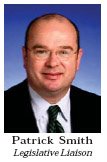
Patrick Smith, Legislative Liason to Governor Bredesen, attended the Oak Ridge League of Women Voters‘ “Breakfast with the Legislators” program this morning, courtesy of Sen. Randy McNally.

Patrick reiterated the Governor’s commitment to improvements in education funding, including $95 million in new dollars to fully fund the BEP, plus $20 million in new dollars to address ELL and at-risk students (translation: ELL= students who speak English as a second language, if at all; at-risk= poor). The proposed change to a system-level fiscal capacity model is not in this year’s budget, although it remains likely, according to Smith, that it may be introduced in the Legislature. It’s possible that one or more legislators may try to redirect the new funding in Bredesen’s budget toward the proposed system-level model, which would significantly impact how the funds are distributed among the state’s school systems.

In response to a question about why Tennessee doesn’t look to how other states handle the fiscal capacity issue in education funding, Smith answered that the State Board of Education is looking at doing that through a conference, perhaps as early as this Summer. That’s needed, because as he noted in his opening remarks, there are lawsuits pending or in progress in 20-25 states based not on equity, but adequacy — a completely different (and healthier) debate.

As has been noted in the past, so long as we’re talking about equity, we’re mostly talking about equally inadequate. As pointed out in a 2003 Comptroller’s report (“Funding Public Schools: Is the BEP Adequate?“). What is adequate? From the report referenced:

In contrast to a Basic funding system focusing on inputs, Adequacy refers to a funding system that gives students “access to educational resources and opportunities adequate to achieve desired educational outcomes.”

If every school system had adequate funding, there would likely be a lot less complaining about equity, since everything above adequate would have to come from local taxpayers’ desire to fund improvements.

The general impression is that the change to a system-level model won’t happen this year. I hope that’s correct, but NOW is the time to make sure we’re working toward an eventual solution that improves education statewide, while respecting the efforts of communities that are already carrying a heavier share of responsibility than most.

If we quit working toward that goal or even relax for a few months, it is inevitable that those who seek gains for their own districts at the expense of others would redouble their efforts and likely succeed.

Education Funding War – David vs. Goliath

Metro Pulse gives some insight on the education funding story this morning; unfortunately, it’s only half of the story. Namely, Goliath’s side.

They fail to mention that under the BEP Review Committee’s recommendations, 61.7% of all public school systems in the state would be deemed to deserve less funding. The top five winners — from millions to tens of millions — are Memphis, Shelby County, Davidson County, Hamilton County, and Knox County.

They fail to mention that every municipal school system would lose money, primarily because of the way that shared vs. unshared revenue is treated in the fiscal capacity formula. Simply speaking, cities with municipal school systems who choose to tax themselves at a higher rate in order to fund their school systems better are penalized. That loss would very likely force consolidation with county schools — a feature that many believe is the driving force behind the change.

They surely don’t mention that more than 67% of the dollar increases go to these five mammoth school systems, while some of the state’s smallest, poorest counties are left with less… places like Pickett County, with a total population of 4,999.

The data comes from TACIR’s website, and you can bring up the Excel spreadsheet by clicking here. There are several tabs, but the most relvant is a comparison of same-year (05-06) funding showing the current model, the prototype results, and the difference.

There’s no question that Tennessee needs to re-think the way it funds public education, but so long as we’re just moving money around based on the squeaky wheel principle, we’re not going to improve overall. Although one of the committee’s recommendations is a “hold harmless” provision to ensure that no system receives less than the year before, what this means is a funding freeze that denies any increases despite rising enrollment, heating costs, fuel prices, salaries, insurance, or any of the items over which local school boards have little or no control.

If the state embraces a policy that penalizes local governments for doing the right thing (funding local schools with local taxes) while rewarding those that do not, then they will surely discourage that which is in everyone’s best interest.

Food for thought: if Knox County’s tax rate was the same as Oak Ridge’s tax rate, they could easily match Oak Ridge’s per-pupil funding as well.